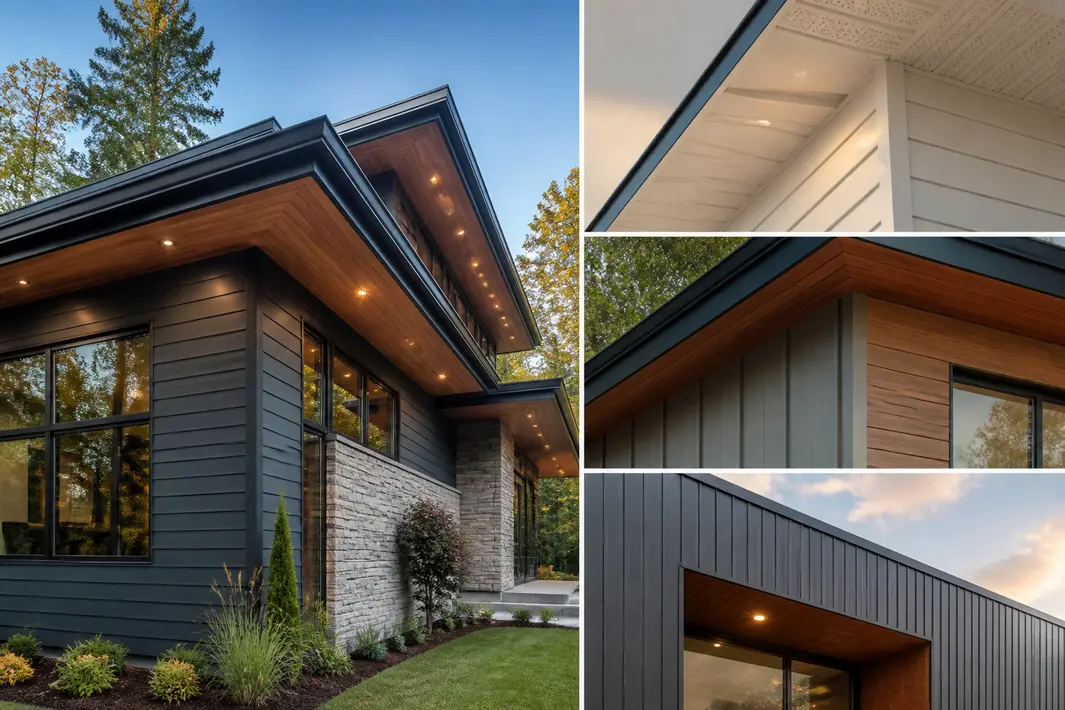
Vinyl Siding Manufacturer & Exporter From India To Australia - Blog
06 October, 2026
Australian buyers need exterior cladding that balances appearance, durability and practical upkeep. Vinyl siding may suit residential, modular and selected commercial projects when the product and wall system are properly assessed. Vorix India can be considered as a potential manufacturing and export partner for buyers researching supply from India. This guide explains product selection, Australian climate concerns, compliance documents, packaging and shipping. It also shows what to ask when evaluating a vinyl siding supplier to Australia.
Why Source Vinyl Siding From India?
Manufacturing flexibility for importers
Importers often need more than a standard panel. Requirements may cover profile dimensions, colours, surface finishes, bundle sizes and private-label packaging. Before placing an order, confirm which options are available from the selected vinyl siding manufacturer and whether they apply to your required volume.
Repeat-order consistency is just as important as initial product choice. Ask how the factory controls raw materials, dimensions, colour and surface texture between batches. Buyers planning ongoing distribution should also confirm production capacity and realistic lead times.
Look beyond the factory price
The lowest quotation may not provide the lowest final cost. Calculate the total landed cost, including freight, insurance, customs charges, GST, port handling, storage and local delivery. Allow for samples, inspections and possible breakage as well.
Why do Australian buyers import vinyl siding from India?
A vinyl siding export from India may offer product choice, export packaging and options for consolidated orders. However, these advantages should be checked against technical evidence, communication quality and after-sales support. Buyers should verify every commercial and performance claim before approving production.
Is Vinyl Siding Suitable for Australian Weather?
UV resistance and colour retention
Australian sunlight can be demanding on exterior wall cladding. Ask for product-specific information about UV resistance, fade resistance and accelerated weathering. A general statement such as “UV protected” is not enough. The report should identify the tested formulation, colour, method and result.
No exterior colour should be described as unable to fade. Exposure, orientation, shade and local climate can all affect appearance over time.
Moisture and coastal conditions
Vinyl does not absorb water in the same way as untreated timber. Even so, moisture resistance depends on more than the face panel. Flashings, drainage paths, openings and ventilation must be correctly designed to protect the complete wall.
For coastal projects, fasteners and other metal components also need attention. A building professional should select materials that suit the site’s salt exposure and construction system.
Thermal movement in hot weather
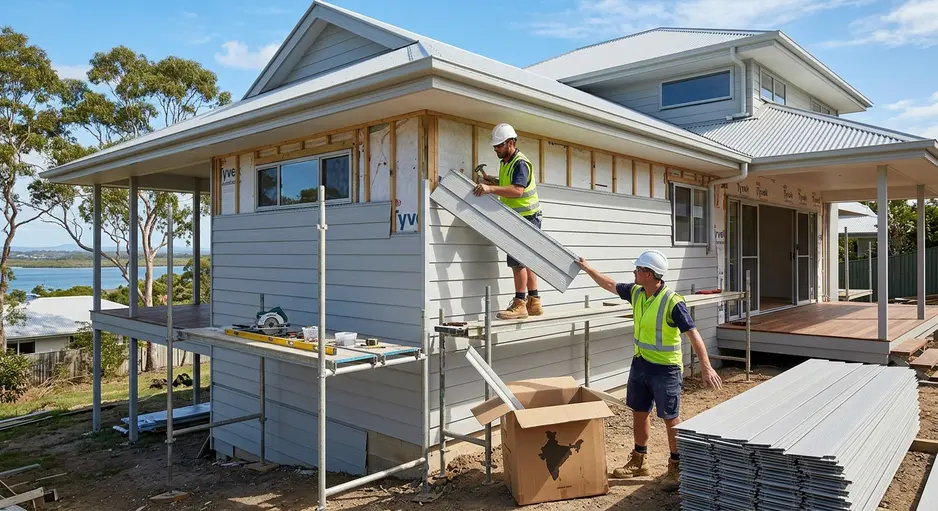
PVC siding panels expand and contract as temperatures change. Installers must follow the required fastening slots, overlaps and edge clearances. Fasteners should not prevent normal panel movement. Dark colours may have different installation limits, so request guidance for the exact product.
Wind and impact resistance
Panel thickness alone does not prove wind or impact resistance. Performance can depend on the profile, substrate, fasteners, spacing and building height. Projects in higher-wind regions may require test evidence and project-specific engineering.
Vinyl Siding Panels, Profiles and Finishes
Horizontal and weatherboard profiles
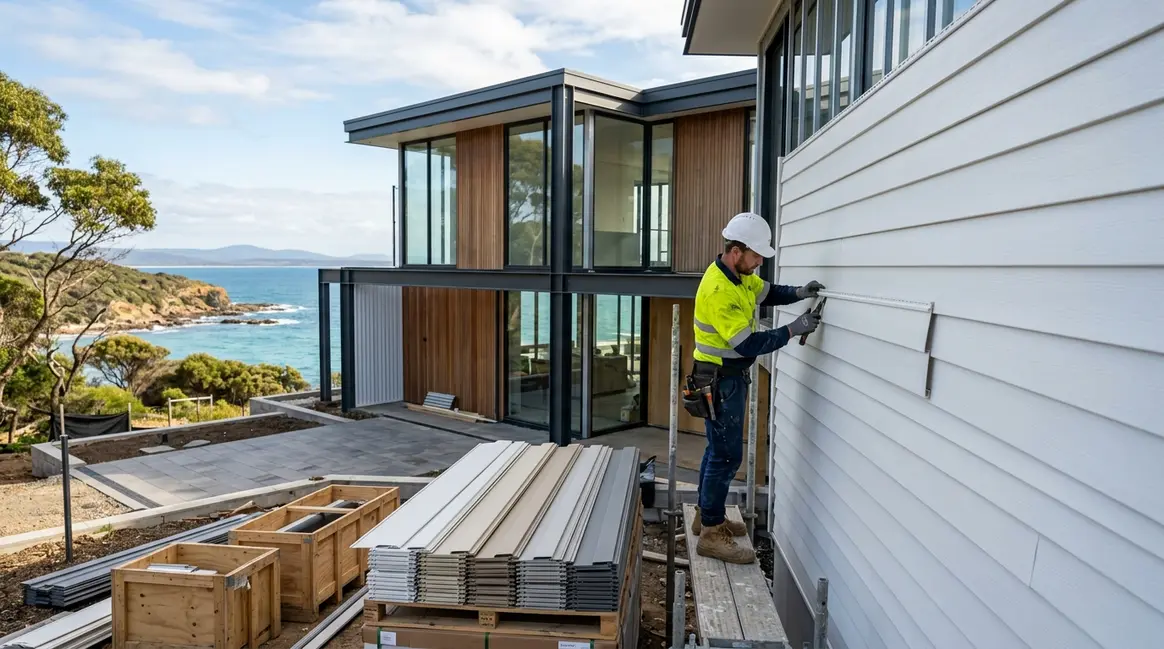
Horizontal siding can create the familiar layered appearance associated with weatherboard cladding. It may be considered for houses, extensions and prefabricated buildings. Wood grain texture and defined shadow lines can add visual depth without using natural timber boards.
Vertical siding
Vertical siding can provide a clean, contemporary facade. It may also work as an accent on gables or selected walls. The supporting battens, flashings and fixing pattern must suit the chosen profile and installation direction.
Interlocking siding panels
Interlocking siding panels are designed to connect along their edges, helping create aligned joints and concealed fixing areas. Their lightweight cladding format can make handling easier, but panels still need careful storage and installation to avoid damaged edges or distorted locks.
Colours and decorative finishes
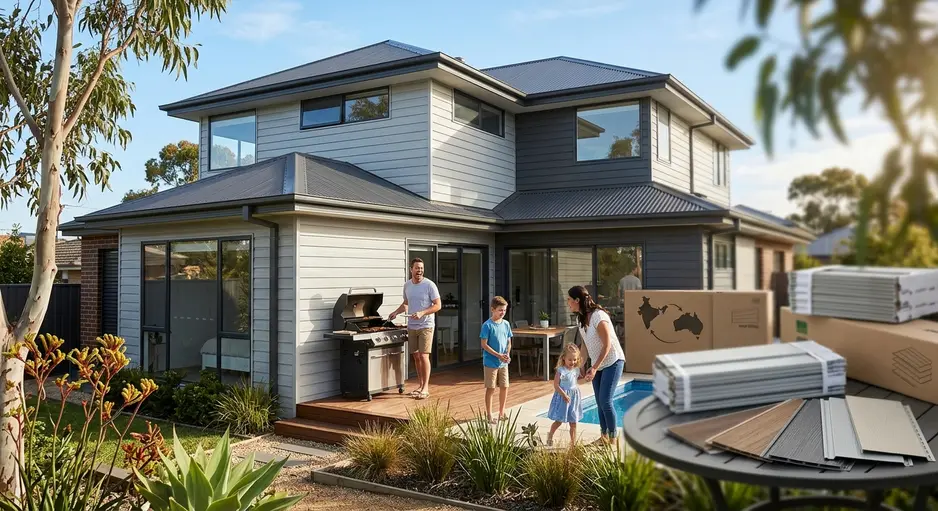
Decorative vinyl siding may be available in neutral or timber-inspired finishes, subject to the manufacturer’s current range. Approve a physical sample before bulk production. Where panels will be ordered in stages, discuss batch matching and the supply of spare boards.
What Compliance Documents Should Buyers Request?
National Construction Code considerations
Product suitability depends on the building class, location and complete wall assembly. Requirements can differ between detached homes, apartments and commercial buildings. State or territory provisions may also affect approval.
Buyers should review the current National Construction Code and seek advice from an Australian certifier, building surveyor or engineer. A product should not be promoted as “NCC approved” unless that statement is supported and applies to the proposed use.
Fire and bushfire performance
Vinyl wall siding should not be described as universally fireproof. Ask for applicable fire test reports and check whether they cover the panel alone or the complete wall system. The tested components, cavity, insulation, substrate and fixings can matter.
For bushfire-prone land, the project team should assess the relevant Bushfire Attack Level and AS 3959 requirements. Suitability for one project does not confirm suitability for every location.
Wind-load and fixing information
Wind design may need to consider the region, terrain, shielding, building height and wall location. Request fixing centres, substrate requirements and any supported pressure data. AS/NZS 1170.2 may be relevant to wind actions, while AS/NZS 4256.4 and AS/NZS 1562.3 may need review for certain products or applications. Current requirements should be checked through Standards Australia.
Technical documentation checklist
Technical data sheet and material description
Panel dimensions, tolerances and unit weight
Installation, storage and handling instructions
Relevant reports from recognised laboratories
Warranty terms, limits and exclusions
Batch or lot identification process
Safety information where applicable
Commercial invoice and packing list
Country-of-origin and shipping documents
Compliance note: A test result does not automatically approve a product for every Australian project. Final acceptance should be confirmed by the responsible local professional.
How to Choose a Vinyl Siding Manufacturer
Evaluate the factory, not only the sample
A well-presented sample does not prove that a factory can maintain quality across a full shipment. Ask about incoming material checks, in-process inspections, finished-product review and colour controls. Confirm output capacity and allow enough time for production and inspection.
Request product-specific evidence
Technical reports should apply to the exact profile, material formulation and colour being purchased. Ask for weathering, dimensional stability, impact and relevant fire information. Installation instructions and written warranty conditions should be reviewed before an order is signed.
Assess export support
An experienced exterior vinyl siding supplier should communicate clearly about samples, Incoterms, packaging and container loading. Buyers should also understand the process for reporting shortages, transit damage or product concerns.
Questions to ask a vinyl siding supplier to Australia
Can you maintain colour and dimensions across repeat orders?
Which reports apply to this exact panel and formulation?
What are the minimum order and custom-colour conditions?
How will panel edges and locking profiles be protected?
What is excluded from the warranty?
How are damaged or short-shipped bundles handled?
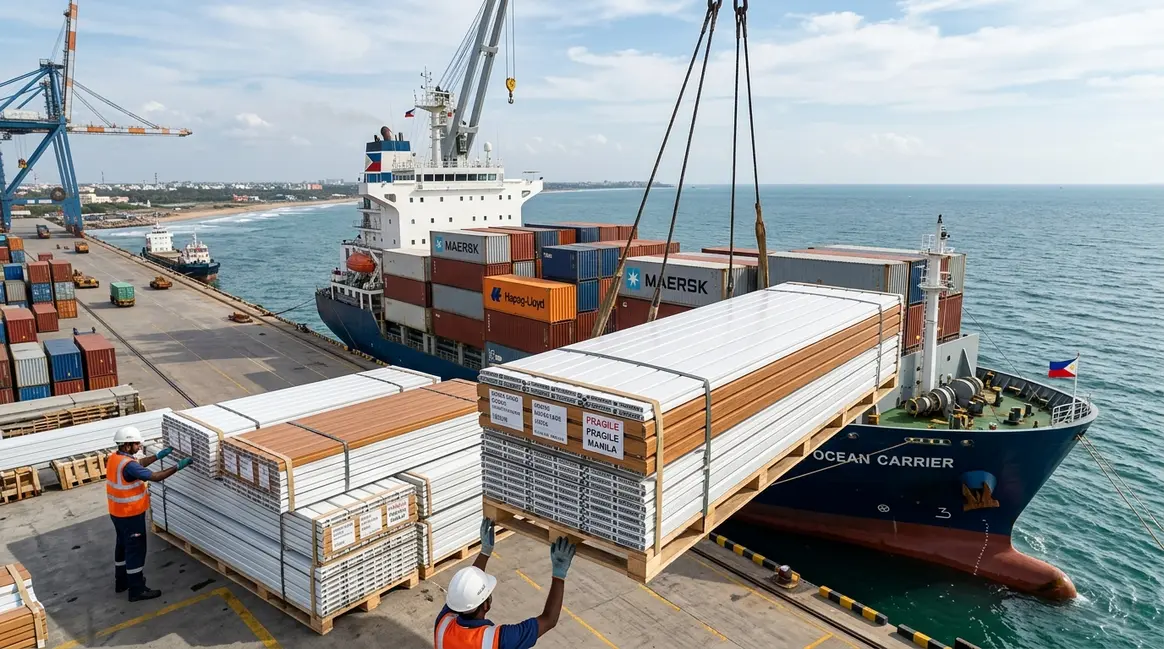
How Vinyl Siding Is Exported From India
From enquiry to approved sample
Share the profile, colour, quantity and intended application.
Review technical data, available reports and installation details.
Request physical samples for appearance and dimensional checks.
Approve the colour, texture, profile and packaging specification.
Confirm the Incoterm, production schedule and payment conditions.
A PVC vinyl siding exporter to Australia should make the approved specification clear in the commercial documents. Any later change to materials, colour or dimensions should require written buyer approval.
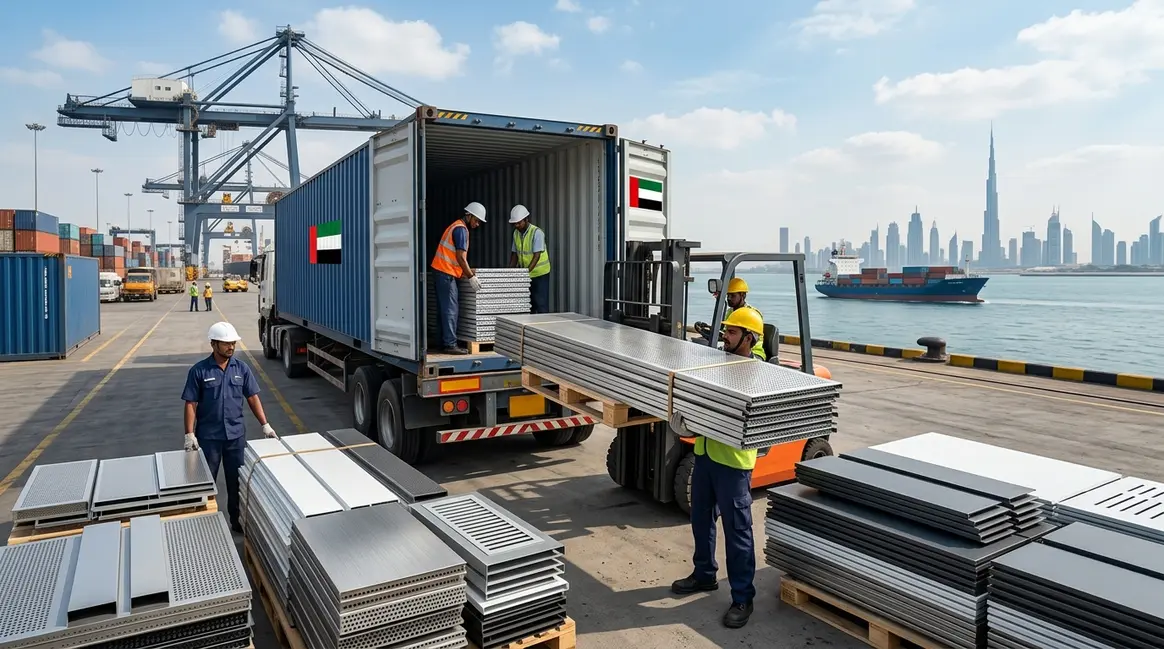
Packaging and container loading
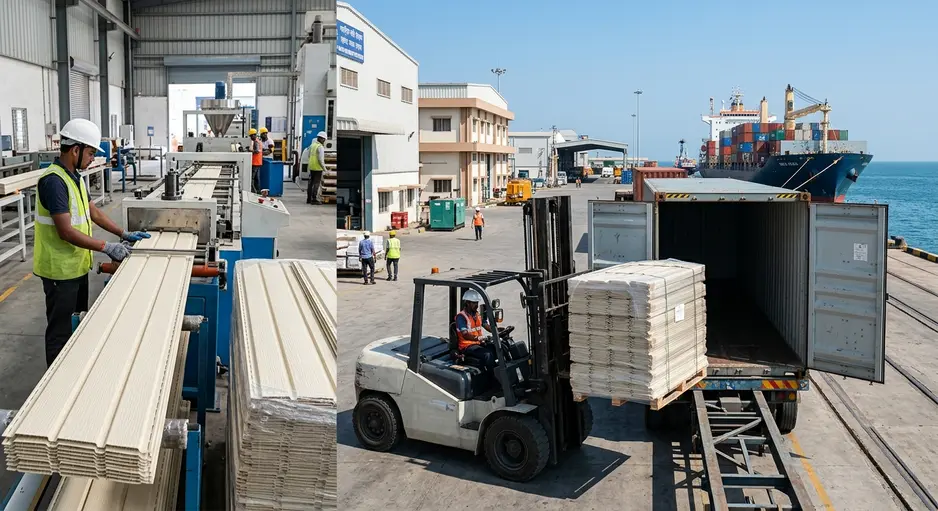
Long exterior siding panels need support during packing and transport. Bundles should protect corners, edges and interlocking sections. Stacking must reduce the risk of bending or deformation, while labels should remain readable in normal shipping conditions.
If timber pallets or dunnage are used, check current biosecurity and ISPM 15 requirements through the Department of Agriculture, Fisheries and Forestry.
Customs and import preparation
Confirm the tariff classification with a licensed customs broker. Typical documents may include the commercial invoice, packing list, bill of lading and origin records. The buyer and seller should agree who is responsible for freight, insurance, customs duty, GST, port costs and domestic transport.
Importers can review current customs guidance through the Australian Border Force. Requirements should be checked again before shipment because classifications and import conditions can change.
Project Scenarios and RFQ Checklist
Coastal residential development
This illustrative scenario involves vinyl siding for residential projects near the coast. The procurement team would prioritise UV data, colour stability, moisture-control details, suitable fasteners and local wind assessment. It would also confirm whether replacement panels could be supplied in a matching finish.
Lightweight commercial or modular building
For a modular project, priorities may include repeatable dimensions, efficient installation and protected export packaging. Vinyl siding for commercial buildings also requires careful review of fire, wind and external-wall provisions. Approval should be based on the complete proposed construction, not appearance alone.
Information to include in an RFQ
Project location, building type and intended application
Required panel profile, dimensions and quantity
Colour, finish and wood grain preferences
Known wind, coastal or bushfire conditions
Required test reports and technical documents
Preferred delivery port and target arrival date
Sample, labelling and packaging requirements
Requested FOB, CIF or other available quotation basis
Vinyl siding can offer lightweight handling, decorative finishes and practical exterior building protection. A successful order, however, depends on verified performance, suitable detailing, careful installation and complete export documents.
Contact Vorix India to request the current catalogue, technical data sheets, samples, packing information, MOQ and production lead time. Buyers can also ask which FOB, CIF or other quotation options are available for their Australian delivery requirements.
Frequently Asked Questions
1. Is vinyl siding suitable for Australia’s hot climate?
It may be suitable when the formulation, colour and installation method account for strong UV exposure and thermal movement. Buyers should review weathering evidence and follow product-specific fixing instructions.
2. Is vinyl siding allowed under the Australian NCC?
Suitability depends on the building class, location and wall system. An Australian certifier, building surveyor or other responsible professional should assess the proposed use against current requirements.
3. Can it be used in bushfire-prone areas?
Do not assume that vinyl cladding is suitable for every Bushfire Attack Level. The product and complete construction system must be assessed for the project’s location and applicable requirements.
4. How long does exterior vinyl siding last?
Service life varies with material quality, climate, colour, exposure, installation and care. A fixed lifespan should only be relied on when supported by clear warranty terms and suitable performance evidence.
5. Does vinyl siding need maintenance?
It is commonly selected as low maintenance siding, but it is not maintenance-free. Periodic washing, inspections and timely replacement of damaged panels may still be needed.
 Join Vorix WhatsApp Community
for updates, trends, and business opportunities!
Join Vorix WhatsApp Community
for updates, trends, and business opportunities!