12 September, 2026
UAE buildings need exterior materials that can handle heat, humidity, dust, strong sunlight, and coastal air. These conditions make soffit selection important for villas, apartments, hotels, offices, and retail projects. A soffit is not just a decorative ceiling. It can protect roof eaves, conceal services, and support roof ventilation.
When choosing a soffit manufacturer, buyers should compare materials, test evidence, finishes, fixing systems, and export support. Vorix India can be considered for project enquiries involving supply from India to the UAE. Before ordering, buyers should confirm technical suitability, compliance, quantities, packaging, and delivery requirements for their specific project.

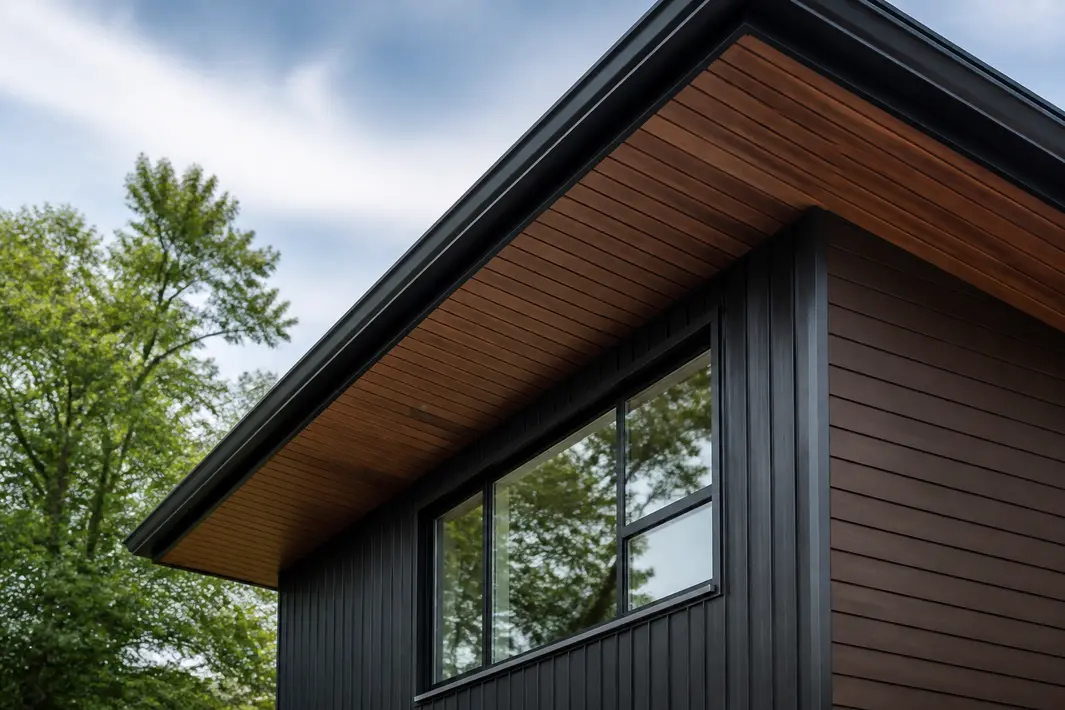
Exterior soffit cladding is commonly installed below roof eaves, canopies, balconies, porches, and covered outdoor ceilings. It creates a neat surface while hiding framing, wiring, ventilation paths, and other building services. The right panel can also reduce routine upkeep in areas that are hard to reach.
High surface temperatures can cause materials to expand and contract. This movement must be considered when selecting profiles, fasteners, joint gaps, and supporting frames. Dark finishes may absorb more heat, so the installation design should allow for the movement stated in the product guidance.
Buyers looking for UV-resistant soffit panels should request weathering information rather than rely on colour samples alone. UV performance, temperature limits, coating quality, and warranty conditions should match the intended exterior application.
Moisture-resistant soffit panels can be useful in humid or partly exposed areas. However, the full system matters. Panels, trims, screws, clips, coatings, and supporting members should be compatible with each other.
Coastal projects may require added attention to corrosion resistance. Dust also collects on horizontal and recessed surfaces. Project teams should therefore review cleaning methods, access needs, and maintenance frequency before approving a material or finish.
Fire performance varies by panel material, coating, backing, insulation, supporting frame, and complete assembly. A product should not be described as fireproof without suitable evidence. Where fire-resistant soffit panels are specified, buyers should request valid test reports and technical documents.
Requirements may be based on the UAE Fire and Life Safety Code of Practice, the Dubai Building Code, municipality rules, or a project-specific specification. Test classifications such as ASTM E84 or EN 13501-1 may also be requested. Final acceptance remains subject to the relevant authority and project consultant.
No single material is right for every building. The choice depends on location, exposure, fire requirements, appearance, budget, and supporting construction. A qualified soffit panel manufacturer should help buyers review these factors before production.
PVC soffit panels are lightweight and moisture resistant. They may be considered for covered roof eaves, porches, and selected residential applications. Interlocking profiles can create a clean surface and may be available in different colours or textures, subject to the manufacturer’s range.
For UAE use, buyers should verify exterior-grade suitability, UV stability, temperature limits, flame-spread results, installation clearances, and warranty exclusions. These checks are especially important for dark colours and areas exposed to direct or reflected sunlight.
Aluminum soffit panels may suit commercial buildings and projects that place greater emphasis on dimensional stability, durability, or a premium finish. Key specifications include alloy, thickness, panel weight, coating system, corrosion resistance, profile design, and colour consistency.
Powder-coated, decorative, or wood-look finishes should only be selected after reviewing actual samples and finish data. Buyers should also confirm whether replacement batches can be produced with an acceptable colour match.
Ventilated soffit panels allow air to enter a roof space when they form part of a planned ventilation system. Options may include continuous slots, formed vents, or perforated soffit panels. Solid panels do not provide the same airflow unless separate vents are added.
The key measure is net free ventilation area, not simply the number of visible holes. Required airflow should follow the roof design and project requirements. Insulation, framing, or stored materials must not block the ventilation path.
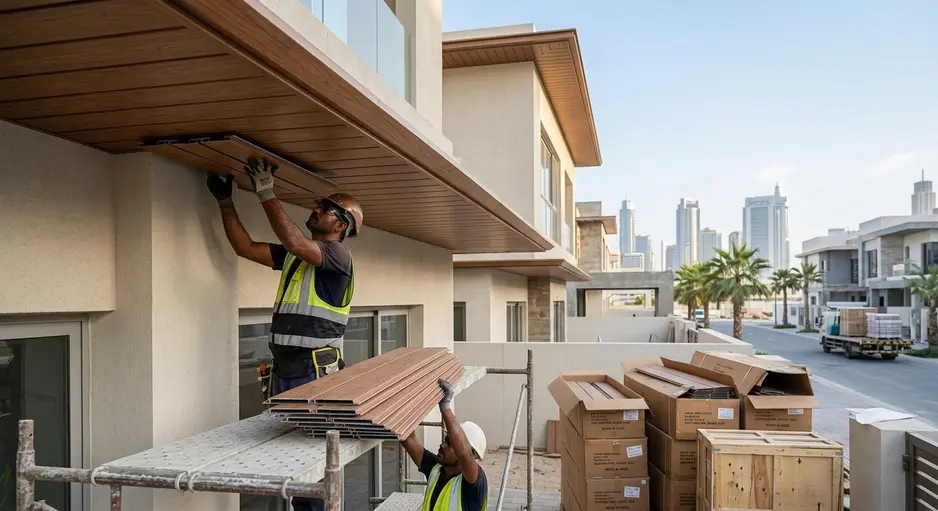
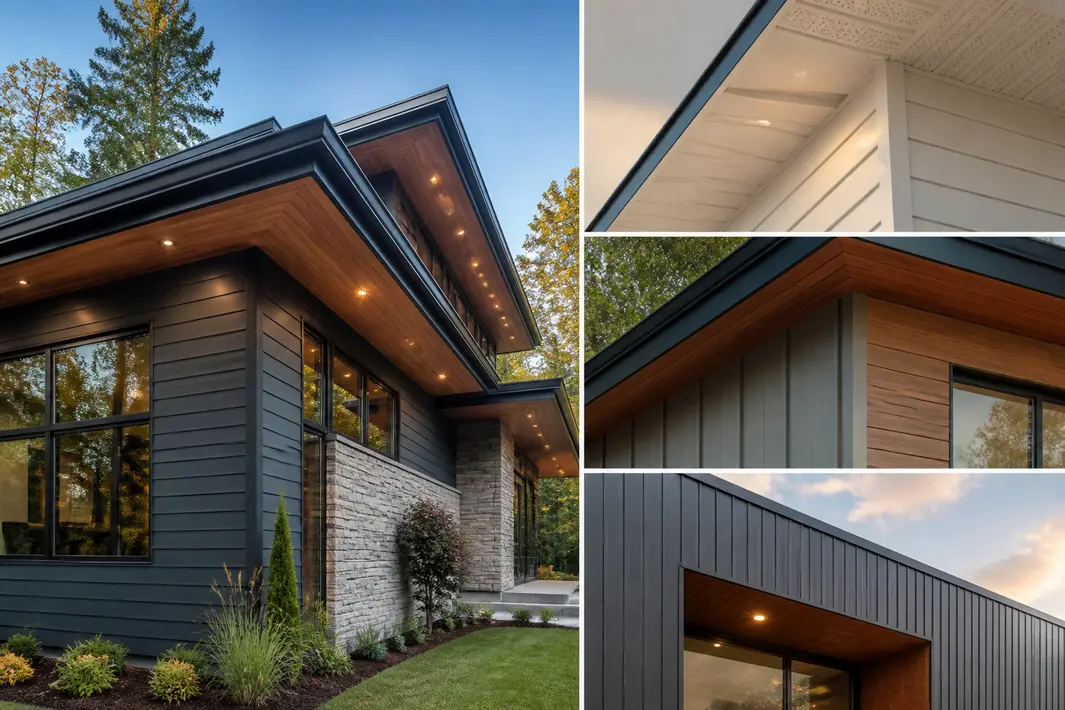
Soffit panels for villas in UAE developments may be installed below roof eaves, entrance canopies, balconies, porches, and covered outdoor areas. Finishes are often coordinated with roofing, windows, façade colours, or wood-look design themes.
Soffit panels for residential buildings should be easy to inspect and clean. Concealed fixing can improve appearance, but installers still need access to joints, ventilation paths, and services where required.
Hotels, offices, schools, shops, and mixed-use developments may need larger quantities and repeatable finishes. Commercial specifications may also place greater focus on fire classification, impact resistance, access panels, and batch consistency.
Lighting, cameras, speakers, sprinklers, signs, and mechanical services should be coordinated before installation begins. Cutting panels on site without an approved layout may affect appearance, ventilation, or system performance.
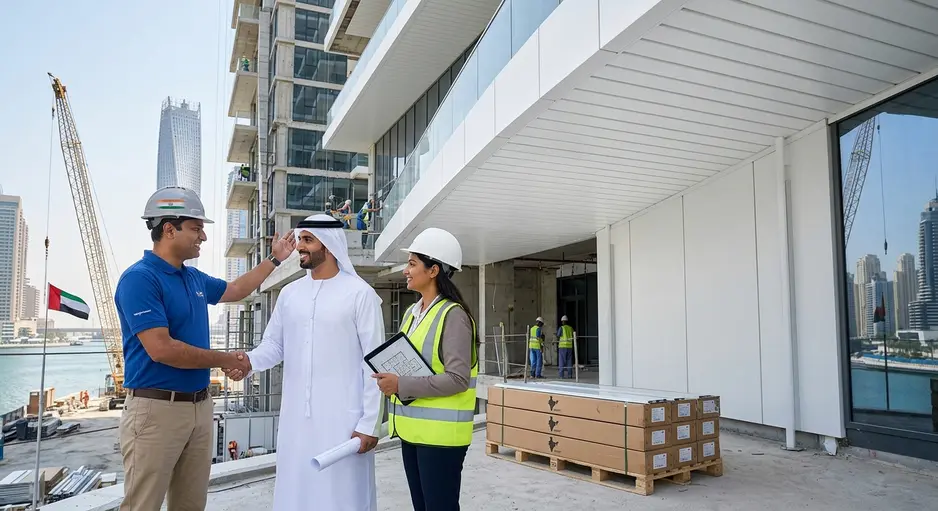
This is an illustrative scenario rather than a Vorix India case study. Every project should be assessed using its drawings, exposure conditions, specifications, and approval process.

A reliable evaluation starts with written technical information. Procurement teams should request enough detail to compare products on the same basis.
Ask the soffit panel supplier about standard lengths, custom sizes, colour options, solid profiles, ventilation patterns, and matching accessories. Trims, channels, corners, flashings, and fasteners should be reviewed as part of one coordinated system.
Samples and mock-ups allow the architect and contractor to check colour, joints, fixing details, and workmanship. Custom profiles or perforation patterns may require minimum quantities, tooling, and extra approval time.
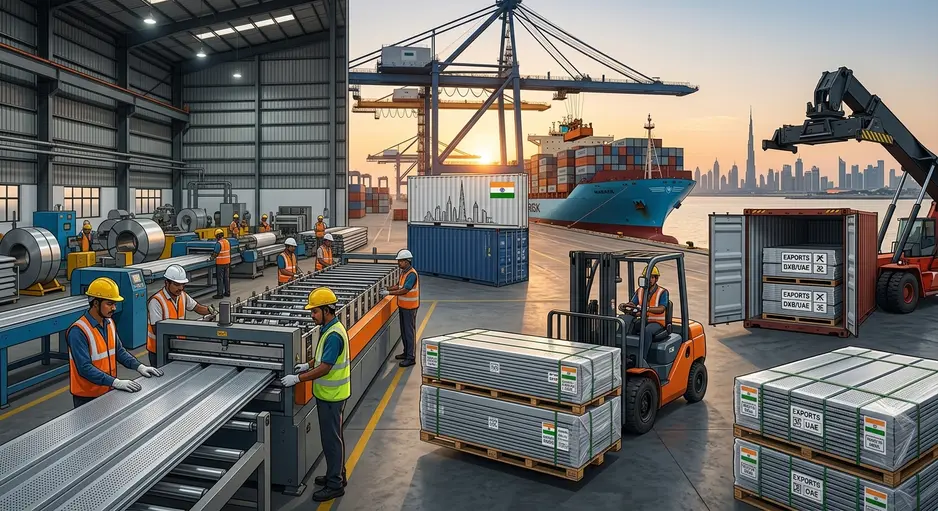
For a soffit panel export order, buyers should ask how dimensions, finish quality, colour, and panel condition are inspected. Batch identification can make it easier to trace packed material and manage phased deliveries.
Export-grade protection is also important. Long panels can bend, scratch, or deform if bundles are not supported correctly. The supplier should explain production timing, packing method, dispatch process, and how shortages or transit damage will be handled.
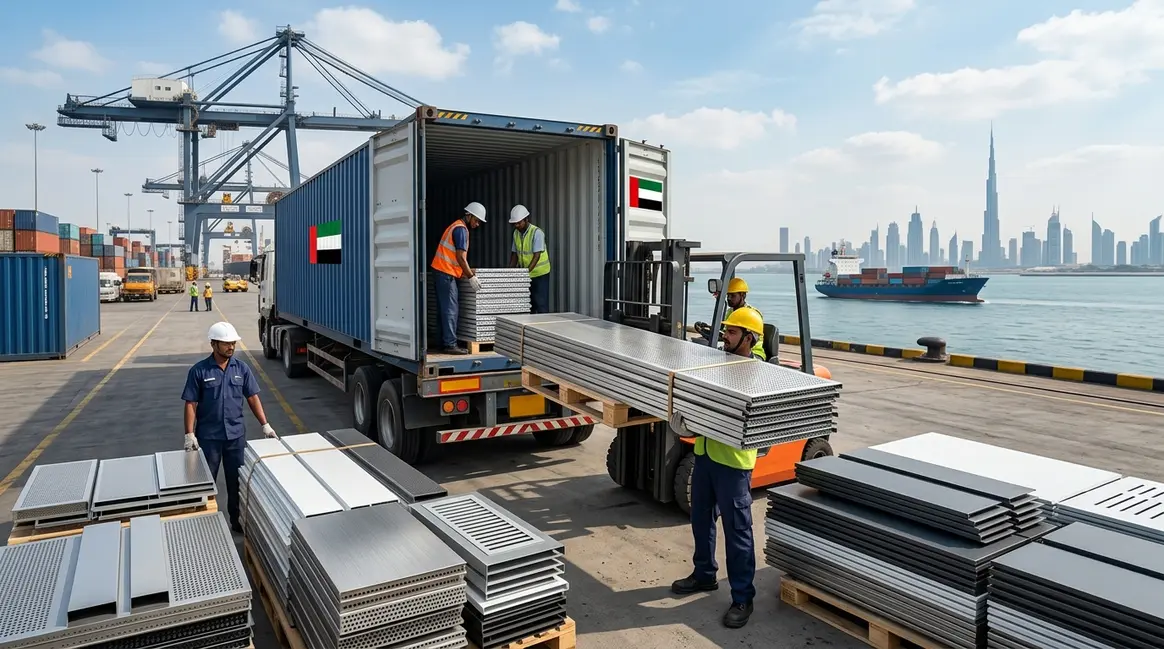
A soffit panel exporter from India to UAE should receive clear project information at the enquiry stage. This reduces quotation gaps and delays later in the process.
Exact documents should be confirmed with the UAE importer, customs agent, and project team. They may include a commercial invoice, packing list, certificate of origin, bill of lading or airway bill, and insurance documents where applicable.
Projects may also request product test reports, conformity documents, or shipment details. The customs classification, consignee information, quantities, and bundle descriptions should be checked before dispatch.
Suitable packing may include protective film, separators, edge guards, supported bundles, and moisture-resistant wrapping. The method should protect profile edges and finished surfaces during loading, sea freight, unloading, and storage.
Sea freight is commonly considered for volume orders, while air freight may be assessed for urgent samples or small consignments. Buyers and exporters should agree on Incoterms, freight responsibility, unloading arrangements, and damage inspection.
Soffit panels price in UAE cannot be judged by panel area alone. Material, thickness, finish, perforation, order quantity, accessories, freight, and installation all affect the final project cost.
PVC and aluminum have different cost structures. Panel gauge, coating quality, decorative finish, custom colour, and profile complexity can change the quotation. Perforated or ventilated designs may also have different production costs from solid panels.
Total square metres, minimum order quantities, cutting waste, spare material, trims, channels, fasteners, flashings, and access panels should be included. Custom tooling or profile development may add a separate charge.
The delivered cost may include export packing, inland transport in India, freight, insurance, customs charges, UAE transport, supporting frames, and labour. Ask for separate prices for panels, accessories, packing, freight, taxes, and installation so competing quotations are easier to compare.

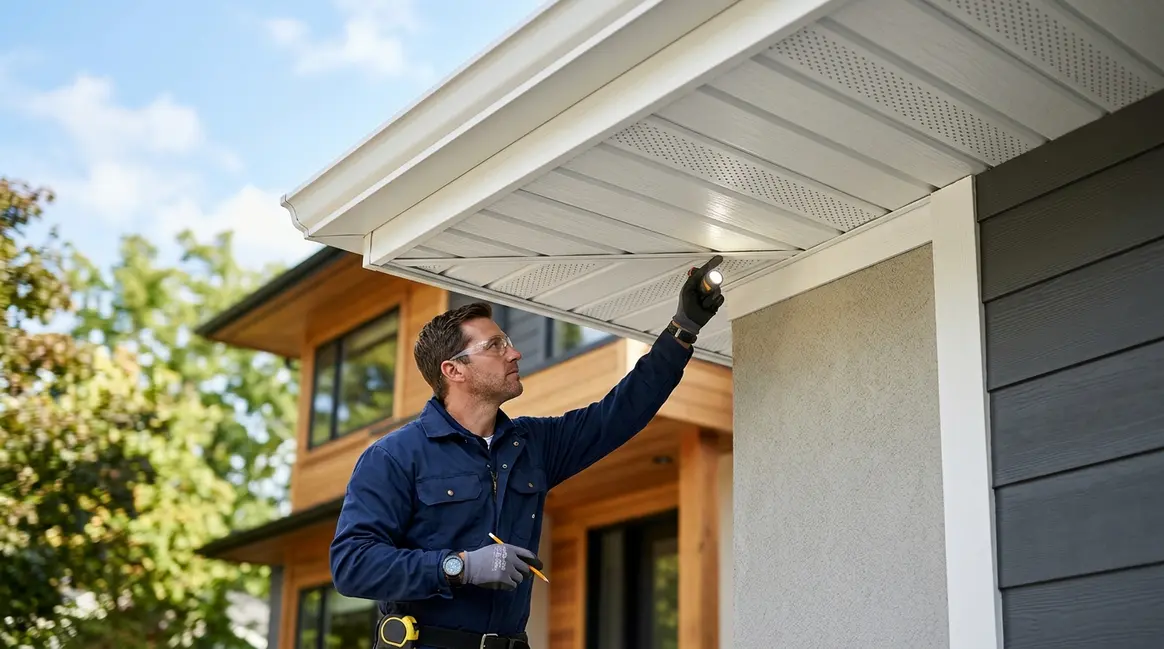
Confirm the substrate level, frame spacing, wind-load requirements, and fixing method before work starts. Use compatible fasteners to reduce corrosion risk. Lights, vents, sprinklers, cameras, and access panels should be shown on coordinated drawings.
Installers should follow the approved fixing instructions and avoid overtightening screws. Required perimeter gaps and joint spacing must be maintained. Vent openings should remain clear, and drainage should be provided where water exposure is possible.
Routine checks should look for loose panels, blocked vents, stains, damaged coatings, or failed sealants. Use approved cleaning methods and avoid abrasive tools or harsh chemicals. Coastal and high-dust sites may need more frequent cleaning.
Successful soffit selection depends on climate suitability, documented performance, compatible accessories, correct installation, and dependable export handling. Buyers should compare suppliers using technical evidence and total delivered cost, not panel price alone.
To discuss requirements with Vorix India, share your drawings, quantities, preferred material, finish, delivery city, and required schedule. Before ordering, confirm that the proposed system meets the project specification, consultant requirements, and applicable UAE approvals.
The answer depends on UV exposure, heat, humidity, coastal conditions, fire requirements, appearance, and budget. Compare verified performance data and the complete installation system rather than selecting a material by name alone.
Properly specified exterior-grade PVC may be considered for covered villa applications. Buyers should verify UV performance, thermal limits, fire classification, fixing clearances, and warranty conditions before approval.
Aluminum is non-combustible as a metal, but coatings, backing materials, insulation, and other assembly parts may affect fire performance. The complete system must be assessed against relevant reports and project requirements.
That depends on the roof design. Where intake ventilation is required, it should be balanced with the wider roof-ventilation plan. Insulation and framing must not block the airflow path.
Pricing depends on material, thickness, profile, finish, quantity, accessories, freight, customs costs, and installation. A project-specific quotation is more useful than a fixed price per square metre.
Soffit Ceiling Panels: What to Check Before Buying
12 September, 2026
Roof Panel Types: Complete Guide for Modern Buildings
12 September, 2026
Soffit and Siding panel Trends for Interior & Exterior 2026
10 August, 2026
Exterior Wall Panels vs Exterior Wall Cladding: Key Differences
08 August, 2026
Architect Guide To Choosing Soffit And Siding Panels
08 August, 2026
Whatsapp Chatx
Hi! Click one of our representatives below to chat on WhatsApp or send us email to vorixindia@gmail.com
![]() |
+91 95866 54600 |