Vinyl Siding Vs UPVC Soffit Panels: Which Is Better? - Blog
23 May, 2026
Choosing the right exterior cladding can make or break a building project. Whether you’re a contractor, architect, developer, or homeowner, the materials you select affect durability, safety, energy performance, and long-term costs. In today’s market, two popular options often compared are vinyl siding and UPVC soffit panels.
This detailed vinyl siding vs UPVC soffit panels comparison explains their purpose, performance, pricing, and ideal applications. While both are durable plastic siding panels made from PVC-based materials, they serve different roles in roofline soffit and wall cladding.
By the end, you’ll clearly understand the difference between vinyl siding and UPVC soffit, which works best for your project, and when combining both creates the most effective building facade finishing system.
What Is Vinyl Siding?
Composition and Manufacturing Process
Vinyl siding is a PVC-based exterior wall cladding material engineered for long-term weather exposure. During production, stabilizers and UV inhibitors are added to improve color retention and weather resistance.
There are two main types:
Standardpanels for general residential use
Insulated vinyl siding panels with foam backing for added thermal efficiency
This makes vinyl a popular choice in exterior cladding materials comparison studies focused on durability and low maintenance.
Common Applications
Vinyl siding is primarily used for exterior wall cladding. You’ll often see it in:
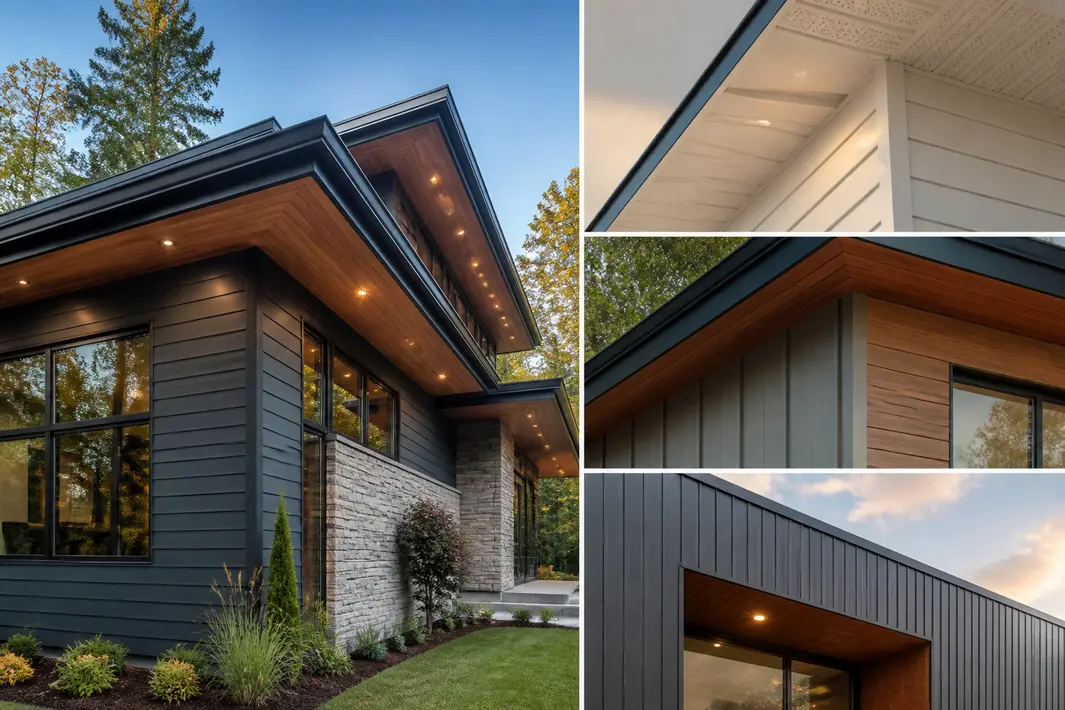
Modern house exterior vinyl siding design
Suburban housing developments
Weatherproof vinyl siding for commercial buildings
Warehouse and light industrial facilities
It is not designed for roof eaves, which is where soffit systems come into play.
Key Advantages
Low maintenance exterior cladding
Waterproof exterior wall panels performance
Wide color and texture options
Cost effective exterior renovation materials
Available for wholesale vinyl siding panels bulk order
In large housing projects, contractors often select vinyl due to fast installation and consistent finish across hundreds of units.
Limitations to Consider
Can become brittle in extreme cold climates
Moderate fire resistance compared to some UPVC systems
Not suitable for roofline ventilation
For full exterior systems, vinyl must be paired with compatible soffit and fascia components.
What Are UPVC Soffit Panels?
Understanding Roofline Soffit and Fascia Systems
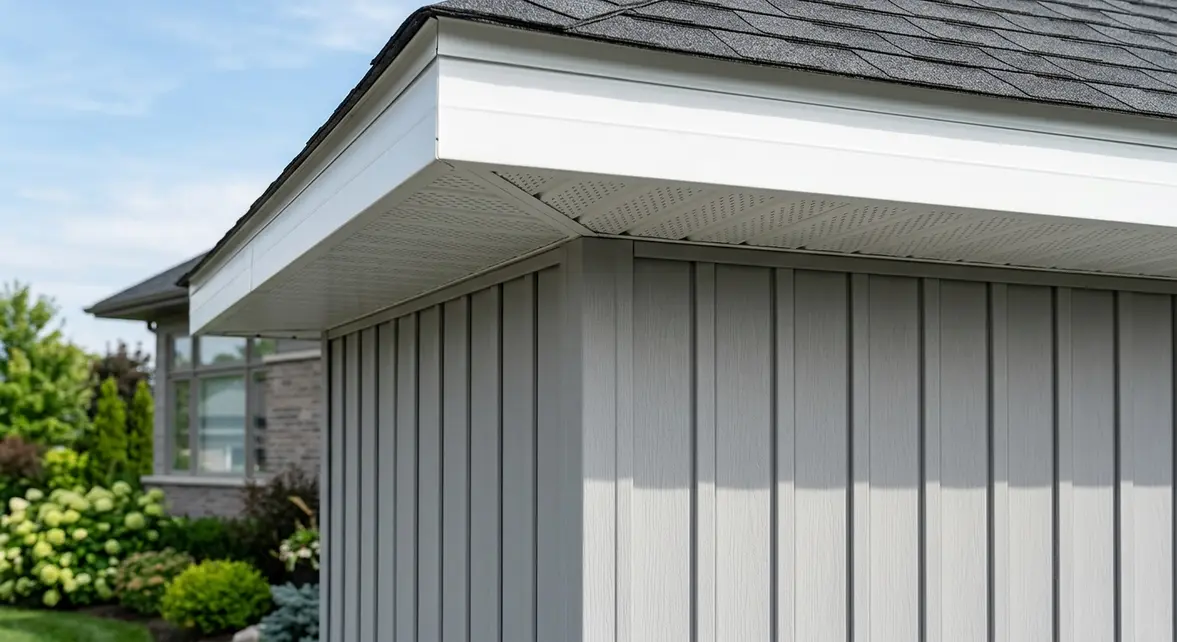
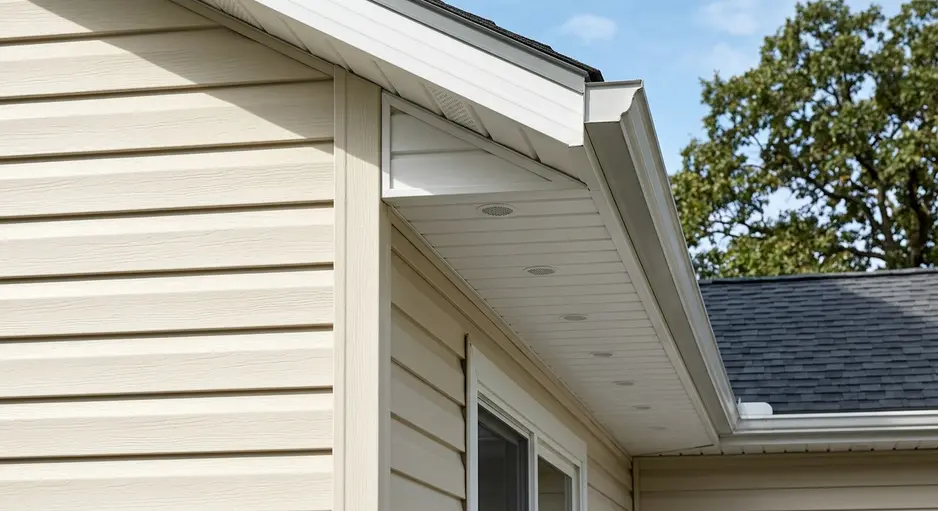
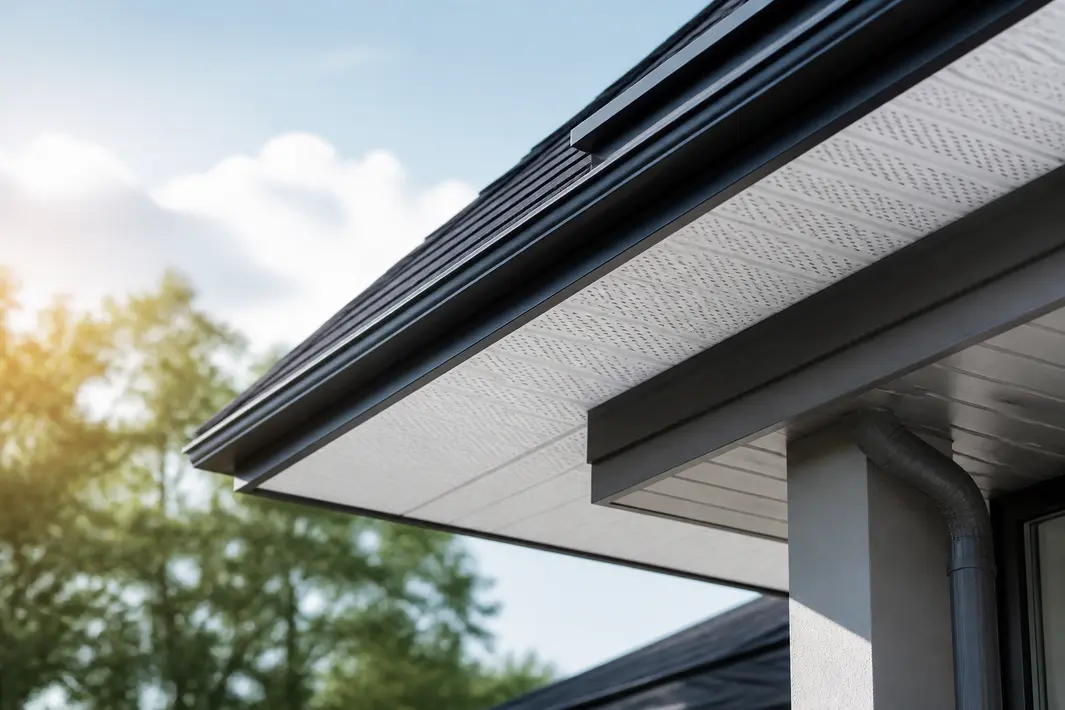
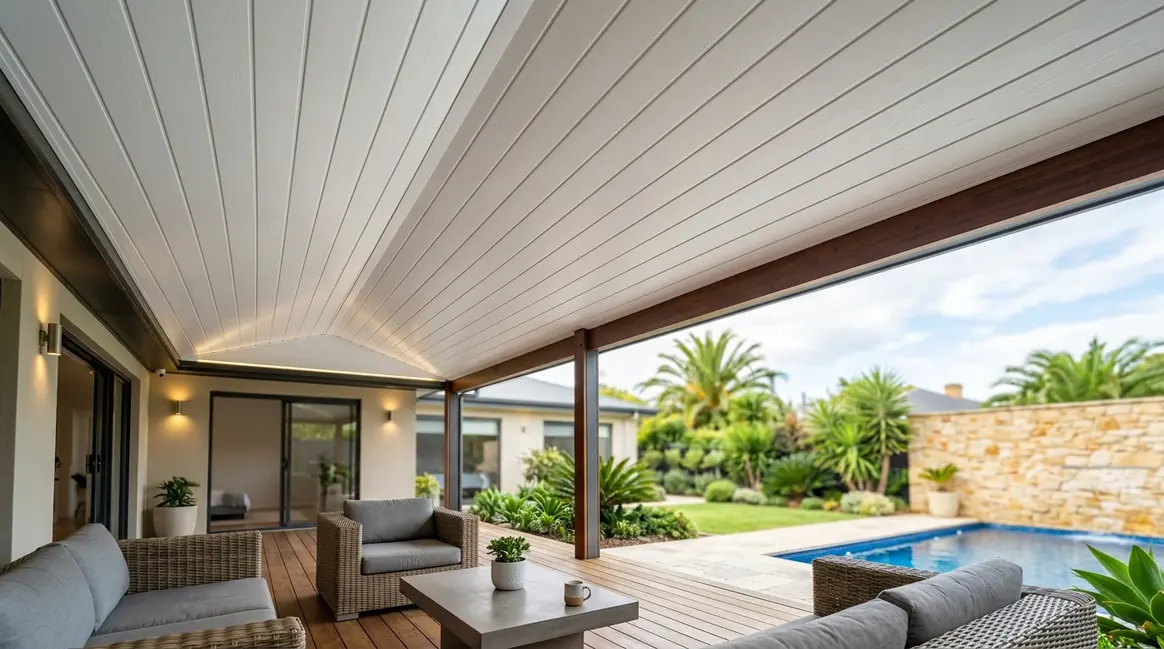
UPVC soffit panels are installed beneath roof eaves to protect rafters and allow ventilation. They are an essential part of roofline soffit and fascia systems.
Unlike wall cladding, UPVC soffit panels for roof eaves are designed to:
Prevent moisture buildup
Allow airflow through PVC roof soffit ventilation panels
Protect against birds and pests
Material Composition and Benefits
UPVC is more rigid than standard vinyl. It offers:
UV resistant UPVC soffit boards
Fire resistant UPVC soffit panels
High moisture resistance
Minimal warping in heat
Applications in Residential and Commercial Projects
UPVC soffit panels for residential and commercial projects are common in:
Independent homes and villas
Shopping complexes
Office buildings
Industrial structures
Limitations
Not intended as primary exterior wall cladding
Fewer decorative styles compared to siding
They serve a specific purpose within the roofline rather than across the facade.
Difference Between Vinyl Siding and UPVC Soffit
Purpose and Placement
Vinyl siding → Covers exterior walls
UPVC soffit panels → Installed under roof eaves
This is the most important difference between vinyl siding and UPVC soffit. They are complementary, not interchangeable.
Structural Performance
Vinyl offers strong weatherproofing for vertical surfaces
UPVC soffit provides better fire resistance in roofline areas
Both resist moisture
Aesthetic Options
Vinyl siding provides greater design flexibility, especially for modern house exterior vinyl siding design trends.
UPVC soffit panels focus on clean roofline finishes and ventilation efficiency.
Installation Requirements
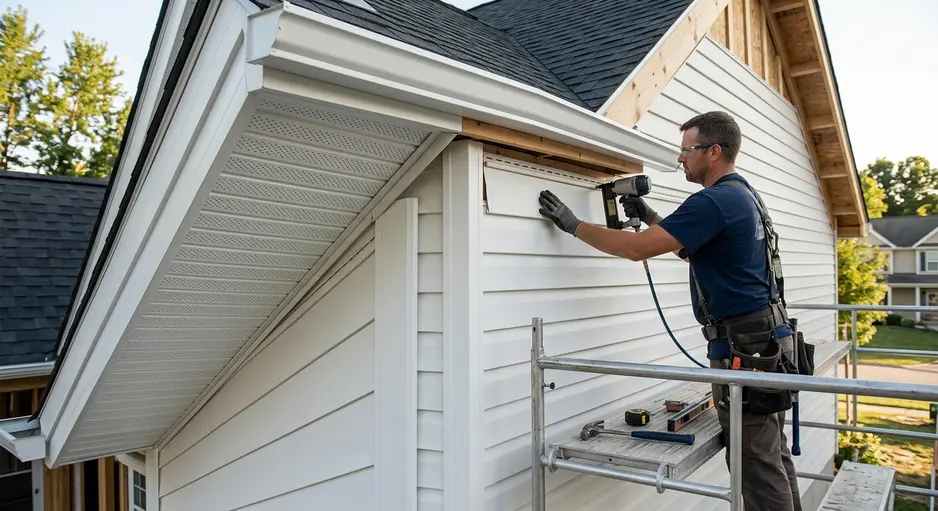
Siding and soffit installation services typically handle both systems together. Key factors include:
Proper expansion gaps for thermal movement
Secure fastening methods
Correct ventilation spacing
Vinyl Siding vs UPVC Soffit Panels Comparison
Feature
Vinyl Siding
UPVC Soffit Panels
Primary Use
Exterior wall cladding
Roof eaves & ventilation
Fire Resistance
Moderate
Higher (fire resistant UPVC soffit panels)
UV Resistance
Good
Excellent
Maintenance
Low
Very Low
Ideal For
Facades
Roofline systems
Which Is Better: Vinyl Siding or UPVC Soffit Panels?
Choose Vinyl Siding If
You need full exterior wall coverage
You want decorative variety
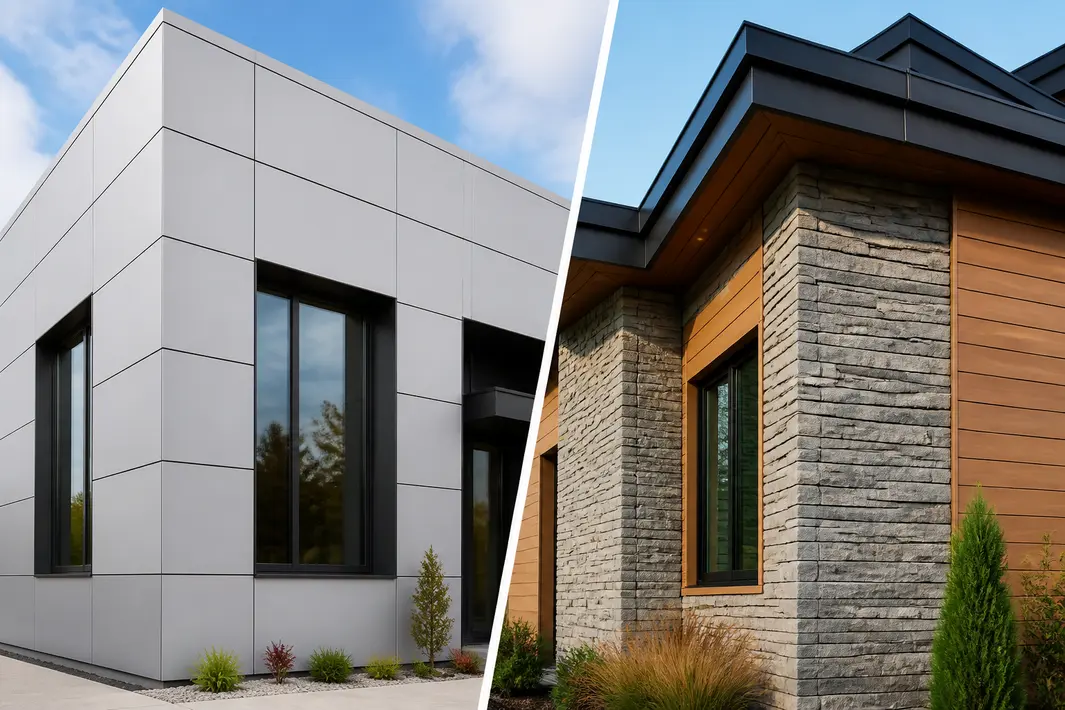
You’re upgrading building facade finishing materials
Choose UPVC Soffit Panels If
You need roofline ventilation
Fire safety is a priority
You want long-lasting eave protection
Best Solution: Use Both Together
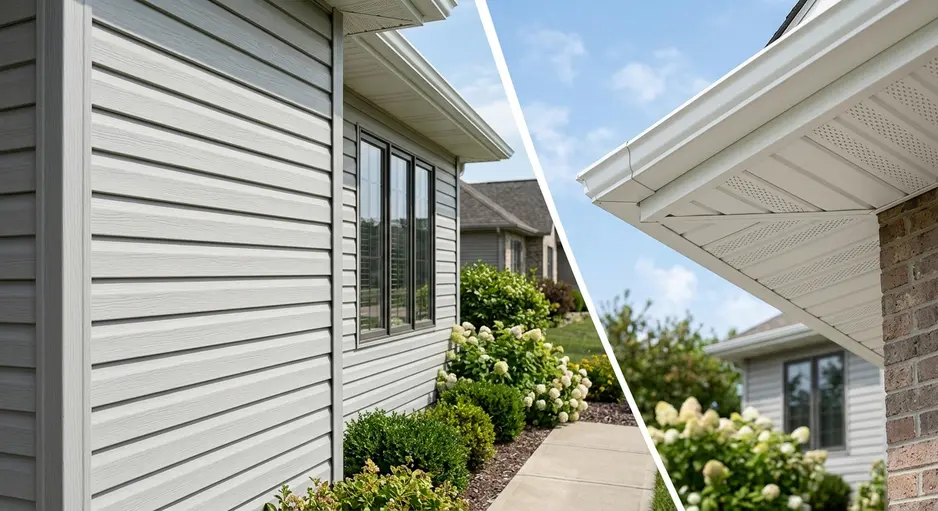
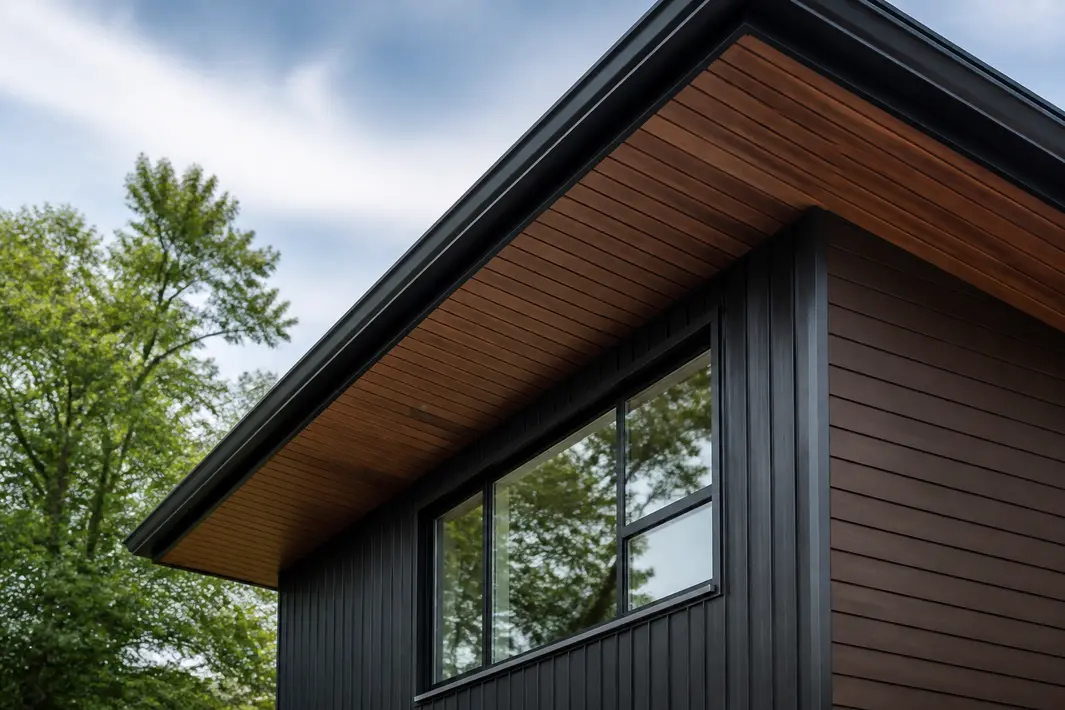
The smartest approach is integration. Many contractors combine vinyl siding and soffit panels for exterior cladding systems.
Cost Analysis and Bulk Supply Options
Material and Installation Costs
Approximate material-only costs:
Vinyl siding: mid-range per square foot
UPVC soffit panels: lower per linear foot
Installation varies based on building height, complexity, and labor rates. Long-term savings come from reduced repainting and maintenance.
This makes them a practical choice for contractors and importers seeking consistent supply.
Durability, Sustainability and Compliance
Weather Resistance
Waterproof exterior wall panels performance in vinyl
UV resistant UPVC soffit boards for long-term roofline exposure
Fire and Safety Considerations
Fire resistant UPVC soffit panels help improve safety around attic areas. Always verify local compliance with IBC and regional building standards.
Environmental Impact
Both materials are recyclable PVC-based systems. When used in sustainable cladding solutions for buildings, they reduce repaint cycles and material waste.
Installation and Maintenance Best Practices
Professional Installation Tips
Leave expansion gaps for thermal movement
Use corrosion-resistant fasteners
Ensure proper soffit ventilation spacing
Align panels carefully to avoid warping
Maintenance Checklist
Clean annually with mild detergent
Inspect joints and fasteners
Replace cracked panels promptly
Check attic airflow through soffit vents
Both systems are considered low maintenance exterior cladding compared to wood or metal alternatives.
When comparing vinyl siding vs UPVC soffit panels, it’s important to understand they are not replacements for each other. Vinyl siding protects and enhances exterior walls. UPVC soffit panels safeguard and ventilate roof eaves.
The best-performing buildings use both systems together. This combination creates a complete, low maintenance exterior cladding solution that improves durability, safety, and appearance.
For contractors, wholesalers, and developers looking for reliable supply, sourcing from a trusted vinyl siding manufacturer and exporter or UPVC soffit panels supplier ensures consistent quality. To explore export-ready solutions and bulk supply options, visit Vorix India and review their product range for residential and commercial projects.
People Also Ask
1. What is the difference between vinyl siding and UPVC soffit?
Vinyl siding covers exterior walls, while UPVC soffit panels are installed under roof eaves. Siding protects vertical surfaces, and soffits protect and ventilate the roofline.
2. Which is better vinyl siding or UPVC soffit panels?
They serve different purposes. Vinyl is better for wall cladding. UPVC soffit panels are better for roofline protection and ventilation. Most projects use both together.
3. Can UPVC soffit panels be used as exterior wall cladding?
No. UPVC soffit panels are designed for horizontal roof eave installation. They are not engineered for large vertical wall surfaces.
4. Are UPVC soffit panels fire resistant?
Yes. Many UPVC soffit systems offer improved fire resistance compared to standard vinyl materials, making them suitable for roofline safety applications.
5. Is vinyl siding good for commercial buildings?
Yes. Weatherproof vinyl siding for commercial buildings is widely used in offices, warehouses, and retail spaces due to durability and low maintenance.
 Join Vorix WhatsApp Community
for updates, trends, and business opportunities!
Join Vorix WhatsApp Community
for updates, trends, and business opportunities!