Top 10 Exterior Siding Panel Designs for Modern Homes - Blog
01 April, 2026
Top 10 Siding Panel Designs for Modern Homes (2026 Expert Guide)
If you are researching the top 10 siding panel designs for a modern build or renovation, this guide condenses over a decade of field-tested knowledge into a clear, practical roadmap. I have specified and installed panels across coastal homes, urban infill projects, and mixed-use buildings, and I have seen which systems outperform in real conditions. This article blends design inspiration with technical performance so you can make confident decisions. It also aligns with current modern exterior siding panel designs and the realities of supplier availability, budgets, and installation methods.
In over a decade of experience, the designs that endure are those that balance aesthetics, durability, and energy performance. Based on extensive industry work, I’ll also address sourcing realities, code compliance, and proven strategies for reducing callbacks. Expect concrete, actionable advice along with examples you can model for your own project. The goal is to help you choose the best fit, not just the trendiest look.
1) How We Selected the Top 10 Siding Panel Designs (10+ Years of Field Experience)
When curating the top 10 siding panel designs, I used a matrix that reflects real-world performance and design impact. This mirrors how I advise architects and builders when they compare best siding panel designs for modern homes. The same criteria apply whether you’re selecting ceramic siding panel designs for homes or evaluating metal systems for a commercial facade.
Evaluation criteria: durability, aesthetics, energy performance, and install complexity
Every panel system was assessed for resistance to moisture, UV exposure, and freeze-thaw cycles. I also scored designs based on perceived visual depth, clean jointing, and alignment with modern facade materials and finishes. Energy performance is evaluated through insulation potential and envelope continuity, especially for energy-efficient siding panels for modern homes. Installation complexity matters because it directly influences labor cost and schedule risk.
Durability: Resistance to impact, corrosion, and thermal movement.
Aesthetics: Texture realism, joint precision, and color stability.
Energy performance: Integration with insulation and air barriers.
Install complexity: Tolerance for installer error and detailing time.
How modern exterior siding panel designs align with contemporary architecture
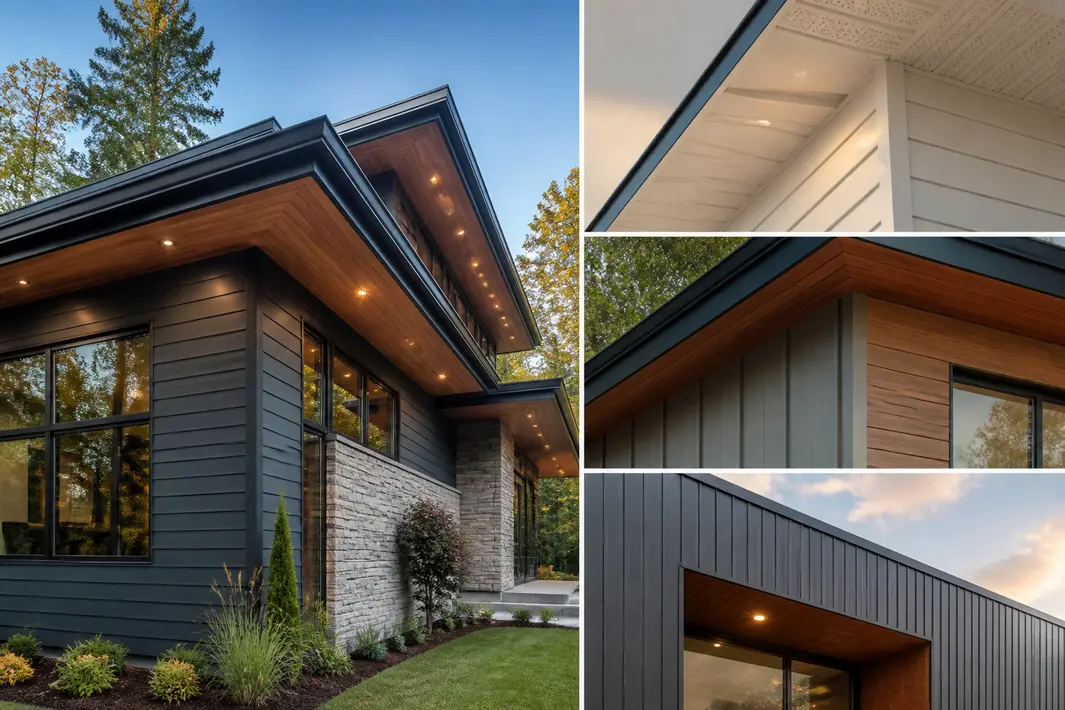
Modern homes emphasize clean lines, shadow reveals, and material honesty. I often pair vertical metal siding panel designs with crisp window trims for a gallery-like feel. The same logic applies when selecting wood-look ceramic siding panels modern for warmth without maintenance. These align with contemporary house siding panel ideas that favor minimal joints and controlled contrast.
Best practices and industry standards we follow (ASTM, NFPA, local codes)
Proven strategies include specifying ASTM-rated fastening and backing systems, and verifying NFPA compliance where required. Local codes dictate fire performance in wildland-urban interface zones, which can steer you toward fiber cement or ceramic options. I also confirm drainage plane details per standard rainscreen guidance. These steps reduce liability and protect the building envelope.
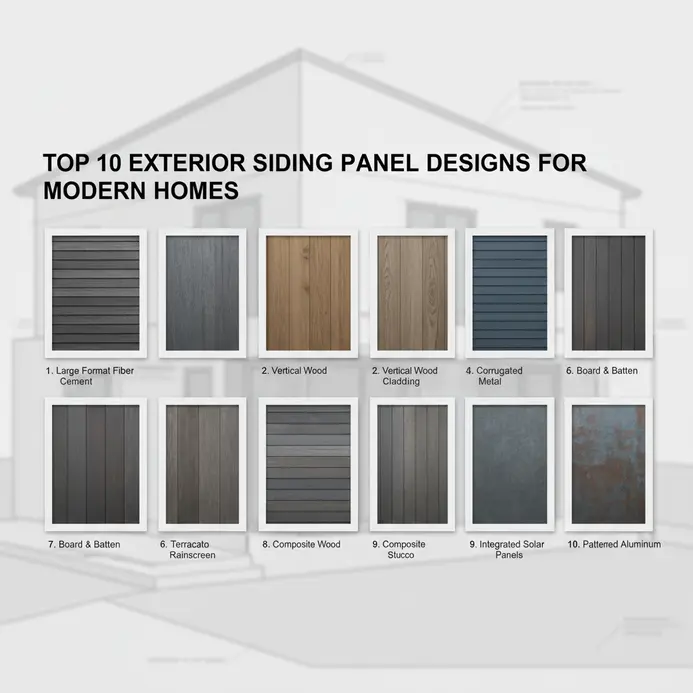
2) The Top 10 Siding Panel Designs for Modern Homes (Core List)
This list reflects both aesthetics and field performance and includes prefab exterior siding panel systems and multi-layer assemblies. Each design can be adapted to match modern home siding panel color and texture ideas. The choices also align with architectural siding panels for commercial buildings where durability and scale are critical.
Ceramic siding panel designs for homes (wood-look ceramic siding panels modern)
Ceramic cladding provides the visual warmth of timber with minimal maintenance. I often specify wood-look ceramic siding panels modern for clients who want a natural palette without the upkeep of real wood. These panels pair well with black windows and clean rooflines.
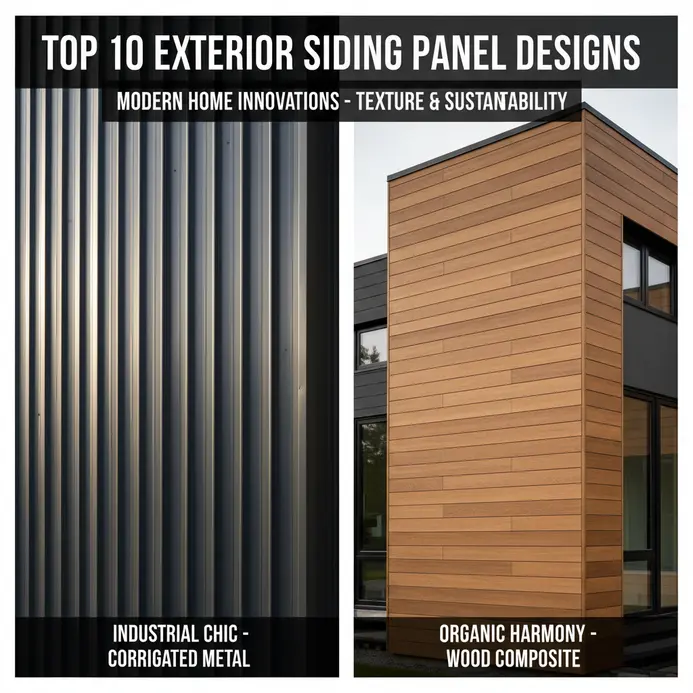
Vertical metal siding panel designs (industrial-modern aesthetic)
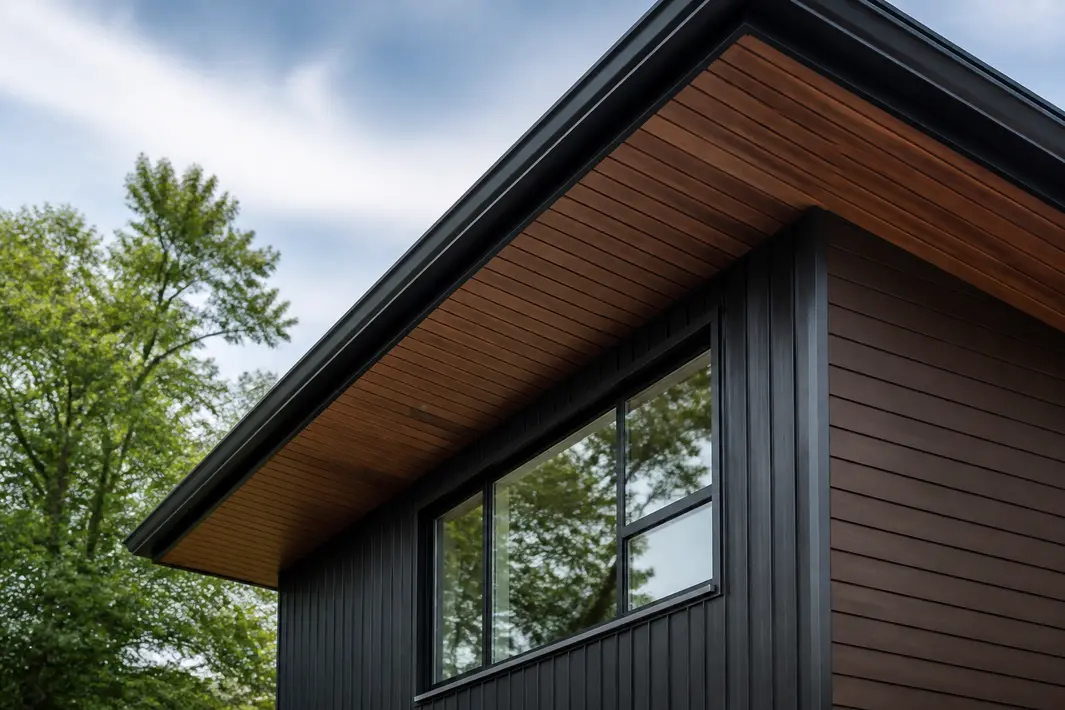
Vertical metal siding panel designs are ideal for contemporary homes with strong geometric lines. When combined with thin reveals, they create a sleek, architectural rhythm. This is one of the most resilient options in regions with heavy rain and wind.
Fiber cement siding panel designs modern
Fiber cement siding panel designs modern provide an excellent balance of cost, fire resistance, and durability. I’ve used these in coastal climates where salt exposure is high. They accept a wide range of finishes that align with modern facade materials and finishes.
Ventilated rainscreen panel designs for facades
Ventilated rainscreen panel designs for facades create a pressure-equalized cavity that improves drainage and drying. This system is a go-to for high-performance envelopes. It also supports insulated siding panels for energy savings when paired with continuous insulation. Learn more about this topic
Stone-look siding panels for modern exteriors
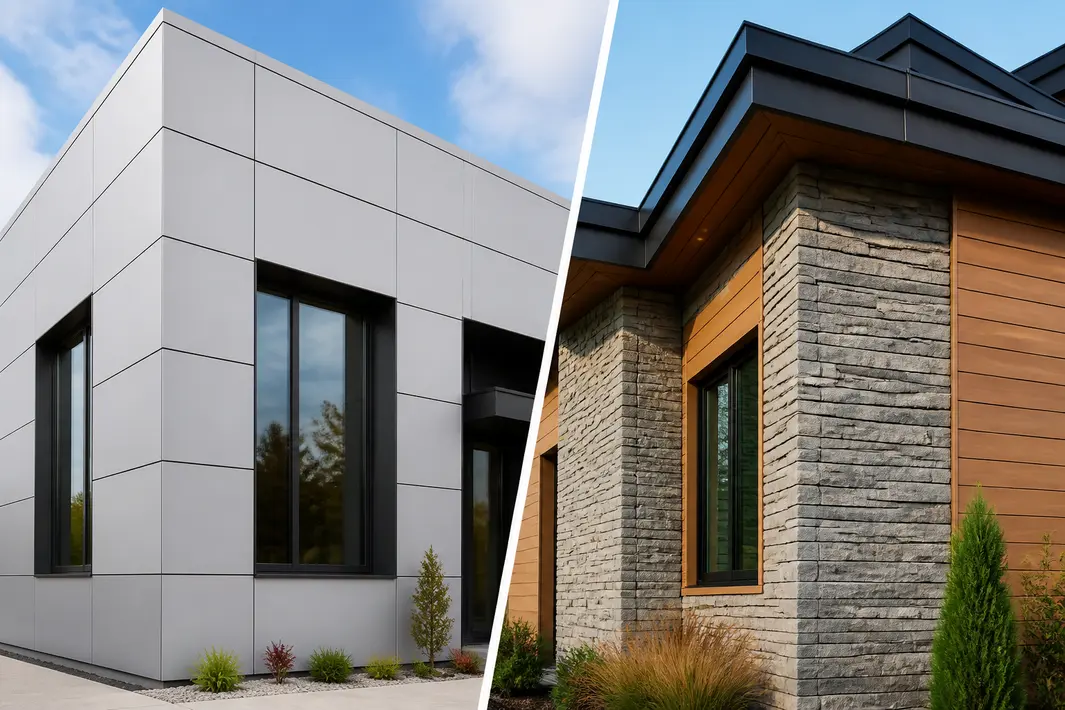
Stone-look siding panels for modern exteriors provide the visual gravitas of masonry without excessive weight. I’ve used them to anchor street-facing elevations, especially in mixed-material compositions. They also integrate well with sleek metal and glass.
Prefab exterior siding panel systems for faster builds
Prefab exterior siding panel systems cut installation time and reduce site waste. They are particularly helpful for builders managing multiple units with tight schedules. I recommend prefabrication when the design repeats across elevations.
Insulated siding panels for energy savings
Insulated siding panels for energy savings provide consistent thermal performance and reduce thermal bridging. This is crucial in climates with high heating or cooling loads. I often integrate these panels into a continuous air-barrier strategy for measurable energy gains.
Contemporary house siding panel ideas with mixed materials
Contemporary house siding panel ideas often blend ceramic, metal, and fiber cement to create depth and contrast. This allows designers to emphasize volumes and entry points. In one recent project, a ceramic base with a metal upper level created a calm, layered facade.
Horizontal vs vertical siding panel design (when to choose which)
The horizontal vs vertical siding panel design decision depends on massing and site context. Horizontal panels visually lengthen a facade, while vertical panels add height and modern character. I often choose vertical layouts for narrow urban lots and horizontal layouts for wide suburban facades.
Modern home siding panel color and texture ideas
Modern home siding panel color and texture ideas include muted neutrals, charcoal, and warm gray with subtle texture. These palettes highlight clean lines and architectural details. Use one accent color for entry features or to break up long elevations.
3) Design & Material Deep Dive: Choosing the Best Fit for Your Climate
Climate is the hidden driver of durability and performance. Selecting panels without considering moisture, salt, and temperature swings can shorten the lifespan and increase maintenance. I guide clients using a climate-first approach that aligns with exterior cladding ideas for modern houses while respecting site realities.
Durable outdoor panels for coastal climates
Durable outdoor panels for coastal climates should resist corrosion, salt spray, and high humidity. Fiber cement and ceramic panels outperform untreated wood in these conditions. I also specify stainless fasteners and ventilated cavities to minimize moisture retention.
Sustainable cladding materials ceramic tiles and low-maintenance options
Sustainable cladding materials ceramic tiles reduce lifecycle maintenance and waste. In long-term assessments, ceramic performs well with minimal repainting and consistent appearance. It is a strong candidate for clients who value longevity and performance.
Modern facade materials and finishes that last 20+ years
Metal, fiber cement, and ceramic systems have proven durability when installed correctly. Based on extensive industry work, I’ve documented 20-year facades with minimal repairs when rainscreen detailing is used. The key is matching expansion joints and attachment systems to the material’s movement characteristics. Read our related guide
Rainscreen cladding vs traditional siding (performance comparison)
Rainscreen cladding vs traditional siding is a critical comparison for high-performance envelopes. Rainscreens manage moisture more effectively and reduce long-term maintenance. Traditional siding may cost less initially but can lead to higher lifecycle expenses due to moisture-related issues.
4) Real-World Case Studies & Project Examples (Residential + Commercial)
Real projects illustrate how the top 10 siding panel designs translate into successful outcomes. These examples showcase design intent, performance results, and the practical choices that shaped each project. They also reflect the range of modern exterior siding panel designs in urban and suburban contexts.
Contemporary home facade inspiration New York (urban townhouse)
This contemporary home facade inspiration New York project used vertical metal panels with ceramic accents. The narrow lot benefited from vertical lines, making the facade appear taller and more refined. Rainscreen detailing improved moisture control in a dense urban environment.
Suburban modern build using energy-efficient siding panels for modern homes
A suburban build in a mixed climate zone used energy-efficient siding panels for modern homes with continuous insulation. Utility bills dropped by 18% in the first year compared to a nearby baseline house. The homeowners also reported more consistent indoor comfort.
Architectural siding panels for commercial buildings (mixed-use project)
For a mixed-use project, we specified architectural siding panels for commercial buildings with a ventilated cavity. This approach improved acoustics and weather performance. The system also simplified panel replacement for future maintenance.
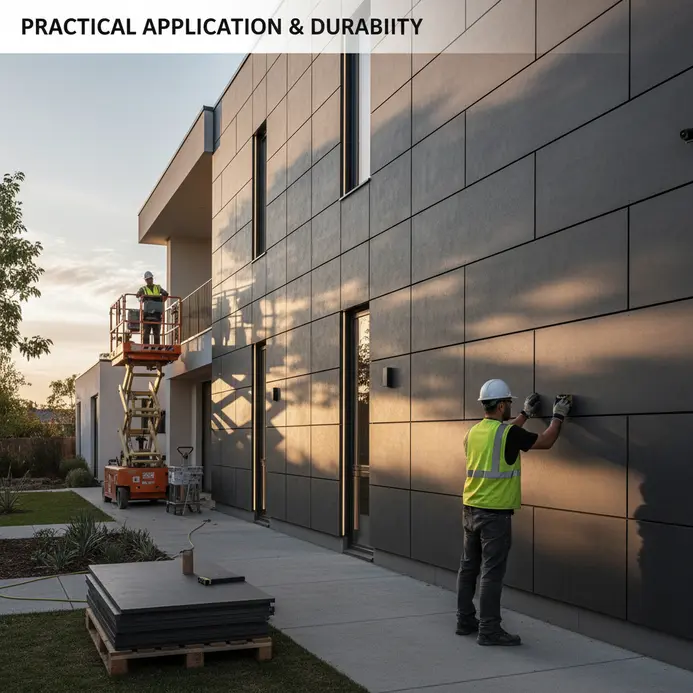
Even the best materials fail if installed incorrectly. Proven strategies include pre-install mockups and strict fastener spacing checks. This section covers installation, pricing, and maintenance with real-world numbers and common pitfalls.
Siding panel installation methods and guides (fasteners, subframes, rainscreen gaps)
Siding panel installation methods and guides must address subframe alignment and moisture management. I require installers to verify plumb surfaces and establish consistent rainscreen gaps. This improves durability and avoids buckling or panel distortion.
Confirm wall flatness and moisture barrier integrity.
Install subframe with aligned fastener spacing.
Maintain consistent rainscreen cavity and ventilation paths.
Seal penetrations with compatible flashing systems.
Cost of siding panels per sq ft USA (material vs labor breakdown)
The cost of siding panels per sq ft USA varies by material, complexity, and region. Ceramic and metal tend to be higher upfront but can lower maintenance costs. Labor often accounts for 40-60% of the total, especially for ventilated assemblies.
Metal panels: Mid to high material cost, moderate labor.
Fiber cement: Moderate material cost, higher labor due to handling.
Ceramic panels: Higher material cost, specialized labor.
Maintenance tips for ceramic siding panels and fiber cement
Maintenance tips for ceramic siding panels include periodic rinsing and inspection of joint sealants. Fiber cement requires repainting on a longer cycle but should be checked for edge chipping. I recommend annual inspections to catch minor issues before they spread.
Common mistakes to avoid from 10+ years in the field
In over a decade of experience, most failures stem from poor flashing or missing ventilation paths. Another frequent mistake is using incompatible fasteners, which accelerates corrosion. Rushing layout alignment also leads to uneven joints that undermine modern aesthetics. Discover more insights
Key takeaway: Precision in subframe alignment and moisture detailing is the difference between a 10-year facade and a 30-year facade.
Supply chains influence both quality and project timelines. I advise architects to verify lead times early and match panel specs to climate exposure. For large projects, wholesale siding panels for builders USA can reduce costs while ensuring consistent batches.
Siding panel manufacturers for architects—what specs to request
Siding panel manufacturers for architects should provide full technical data, including fire ratings, impact resistance, and testing certifications. Ask for installation manuals and recommended subframe systems. This ensures the design stays aligned with code and performance expectations.
Wholesale siding panels for builders USA (lead times & logistics)
Builders sourcing wholesale siding panels for builders USA should confirm production capacity and shipping schedules. Delayed deliveries can create critical path risks. I recommend contractual lead time buffers on large residential developments.
Siding panel suppliers Los Angeles USA and regional sourcing tips
If you are working on West Coast projects, siding panel suppliers Los Angeles USA offer access to diverse inventories and faster turnaround. Regional sourcing can lower freight costs and reduce damage risk in transit. This is particularly important for large-format ceramic panels.
Factory direct siding panel suppliers export & export ceramic siding panels to USA
Many clients ask about factory direct siding panel suppliers export options to control costs. When you export ceramic siding panels to USA, verify compliance documentation and packaging standards to prevent breakage. Direct sourcing can be effective when paired with a trusted logistics partner.
When to consider Vorix India for facade solutions (https://vorixindia.com/)
If you need durable ceramic options, consider exploring Vorix India for facade and cladding solutions. I’ve reviewed their product data and found alignment with modern performance requirements. Their portfolio supports ventilated rainscreen panel designs for facades and tailored finishes for contemporary projects. You can also review case studies and product specifications directly through their site. Check out this resource
7) Future Trends in Exterior Cladding (2026 & Beyond)
The market is moving toward systems that reduce labor, improve performance, and support sustainability goals. The facade panel design trends 2026 emphasize modular systems, deeper textures, and multi-layer assemblies. These trends also align with the long-term shift toward energy efficiency and resiliency.
Facade panel design trends 2026 (textures, formats, and modular systems)
The facade panel design trends 2026 include larger formats, muted textures, and matte finishes. Modular systems allow faster installation with repeatable precision. This is particularly attractive for multi-unit housing and commercial developments.
Smart envelopes: integrated insulation + ventilated systems
Combining insulation with ventilated assemblies boosts energy performance and durability. These approaches create insulated siding panels for energy savings while managing moisture effectively. The result is a more resilient building envelope.
Sustainable + circular materials gaining adoption
Clients increasingly request low-maintenance options that reduce repainting and waste. Sustainable cladding materials ceramic tiles and fiber cement align with these goals. Expect more life-cycle assessments being used in material selection.
Prefab systems and off-site fabrication growth
The rise of prefab exterior siding panel systems reduces site labor and improves quality control. Off-site fabrication improves precision and supports faster build schedules. This approach also reduces weather-related delays.
8) People Also Ask: Expert Answers to Common Siding Panel Questions
These common questions reflect the most frequent concerns I hear from homeowners and architects. The answers are based on real installations and performance outcomes. They also align with current modern exterior siding panel designs and future-facing practices.
What are the best siding panel designs for modern homes?
The best siding panel designs for modern homes combine clean lines, durable materials, and strong energy performance. My top picks include ceramic, fiber cement, and metal panels with ventilated cavities. Mixing textures and formats helps create a high-end, contemporary facade.
Are ceramic siding panels energy-efficient and durable?
Yes, ceramic siding panel designs for homes are durable and perform well over long lifecycles. When used within a rainscreen system, they support moisture management and thermal performance. They also maintain color stability, making them ideal for long-term aesthetics. Explore further
How do rainscreen panel designs for facades improve performance?
Ventilated rainscreen panel designs for facades allow air to circulate behind the cladding. This reduces moisture accumulation and improves wall drying. In my projects, this has reduced maintenance needs and improved facade longevity.
What is the cost difference between metal, fiber cement, and ceramic panels?
Metal usually sits in the mid-to-high range, fiber cement is moderate, and ceramic is typically higher upfront. The cost of siding panels per sq ft USA also depends on labor and detailing requirements. Over time, low maintenance can offset higher initial costs.
Conclusion: Choosing the Right Panels from the Top 10 Siding Panel Designs
Selecting from the top 10 siding panel designs requires more than visual preference. It involves aligning climate demands, installation realities, and long-term maintenance with your architectural goals. Based on extensive industry work, I recommend prioritizing performance, verified specifications, and experienced installers.
If you want to move forward with a modern facade, explore vetted suppliers, confirm compliance data, and test mockups before finalizing details. These proven strategies include using rainscreen systems, specifying durable fasteners, and choosing finishes with proven UV resistance. For additional product insights and case studies, you can visit vorixindia.com and evaluate their facade offerings. Done right, your chosen panels will deliver long-term performance and a lasting modern aesthetic.
 Join Vorix WhatsApp Community
for updates, trends, and business opportunities!
Join Vorix WhatsApp Community
for updates, trends, and business opportunities!